Showing posts with label Math. Show all posts

Wednesday, October 24, 2018

How common is Pregnancy Loss?

(Topic: Pregnancy and Infant Loss Statistics)


Introduction

This is another shareable post! Please feel free to share the link to this blog or this post specifically.

In honor of Pregnancy and Infant Loss Awareness Month, I am focusing on topics that will help friends of families going through the loss of a baby, geared toward making common topics accessible to people outside the "loss community".

Previous posts in this series include:

Pregnancy and Infant Loss Awareness Month (an explanation)
What can I say? Ideas on how to talk to a grieving friend
Wave of Light
A brief glossary of pregnancy and infant loss

Please note that I have previously explored today's topic: By The Numbers, but that I try to make the numbers/statistics accessible today.


What is Pregnancy Loss, and how common is it?

How you define different pregnancy loss types definitely affects how the numbers tally up, so let's take a look at how things come together.

Early Pregnancy

Miscarriage (usually defined as a loss within the first 20-25 weeks of pregnancy) is a tricky one, since really early loss is sometimes so early that the mother might not even realize she's pregnant, and may think the loss is just her next period. Those are impossible to count, though, since a mom would never be able to report that she was pregnant and then lost it. Early pregnancy detection tests mean that people do find out much earlier than they used to, so more people are aware of early losses than in previous decades.

There is data out there about miscarriage frequency, but since it's hard to pin down (what if you only have one positive test and then a period? Was that a pregnancy?) the numbers are less concrete. Once I find solid sources, I will share.


Late Pregnancy

However, stillbirth (a loss within the second half of pregnancy, all the way up to what would be a full term birth) has more solid data. In the US, a stillbirth is considered to be any loss in week 20 of pregnancy or after. According to Global Health Organization standards it's the 25th week and beyond. In both cases, it is when the baby is not born alive (https://www.cdc.gov/ncbddd/stillbirth/facts.html).

In the US, the CDC (Center for Disease Control) is one of the main organizations that keeps track of health data, including death. They say that about 1% of all pregnancies end in stillbirth. That would be 1 baby in 100 - which is a lot. According to WHO (the World Health Agency), who is an international organization, the worldwide rate is actually about 1.8% - which is like 1 baby in 50, which is even more awful. Not only that, but many of these deaths could actually have been prevented (http://www.who.int/reproductivehealth/topics/maternal_perinatal/stillbirth/en/).
Note that these are worldwide rates...

In the US alone, which has about a 3 in 1000 rate of stillbirth death (GHO Stillbirth rates by Country), there are about 24,000 stillbirths a year (CDC, the data from 2013).

According to WHO, "Every year, worldwide, [...] 2.6 million babies are stillborn" (http://www.who.int/mediacentre/news/releases/2016/stillbirths-neonatal-deaths/en/).

I don't think I need to tell you how many devastated parents that leaves...


Pregnancies as a Whole
The number that is often thrown around is "1 in 4" pregnancies results in loss. I am having a hard time finding good sources to document this, but I would just like to point out that it is 1 pregnancy out of every 4, not women, not mothers, and this does seem to include stillbirth statistics, as well as the nebulous and hard to estimate miscarriage numbers I mentioned above.

To sum up, worldwide, 2 in every 100 babies dies in the second half of pregnancy. If we add the whole pregnancy, it might be as many as 25 in 100. That's a quarter of the babies, folks, 1 baby in every 4. This is a huge problem.

Yours,

Sarah

To subscribe, find the "subscribe by email" note in the left column and enter your email there. Posts will be emailed directly to you whenever I post them!

Resource list: Visit my spreadsheet at www.tinyurl.com/infantloss
Wednesday, June 27, 2018

The Math of Grief

(Topic: Infant loss, grief, math)

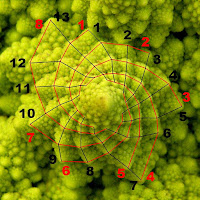
http://aetherforce.com/fibonacci/
Image credit: http://aetherforce.com/fibonacci/


Dear Friends,

I have friends with all sorts of backgrounds, and all sorts of experience. A friend of mine just went through a grief event, so we have been talking, and both of us try to find analogies to help put grief into perspective, or to make it more accessible to people who have not gone through an intense grief event. She and I chatted about analogies from math, which she studied, and she and I tutored math in the same program in college. She allowed me to share with you the following math/grief analogies, which I thought hit the nail on the head.


Prime Number Frequency
 
One of the analogies she said a friend came up with, was using prime numbers as an example. Prime numbers are divisible by the number 1, and by the number itself, but nothing else (example: 13 is divisible by 13 and by 1, but nothing else). So a prime number has only 2 factors: 1 and itself. These numbers happen pretty frequently at first (2, 3, 5, 7, 11, 13...) but then start spacing themselves out more and happening less often. They still sometimes happen near each other in clumps, but over all, the higher you count, the less often prime numbers happen.


Grief, then, is kind of like that: the intense days or moments, and the triggers, happen all the time at first. Then, as time goes on and you work on healing, and life keeps happening, the moments that are hard and the triggers that can cause them will start to come less often. Sometimes they still come in clusters, sometimes there are several in a row, but overall they come less often. And while my experience is limited to 2 years, I can say that this seems to be true for me so far.


Step Functions

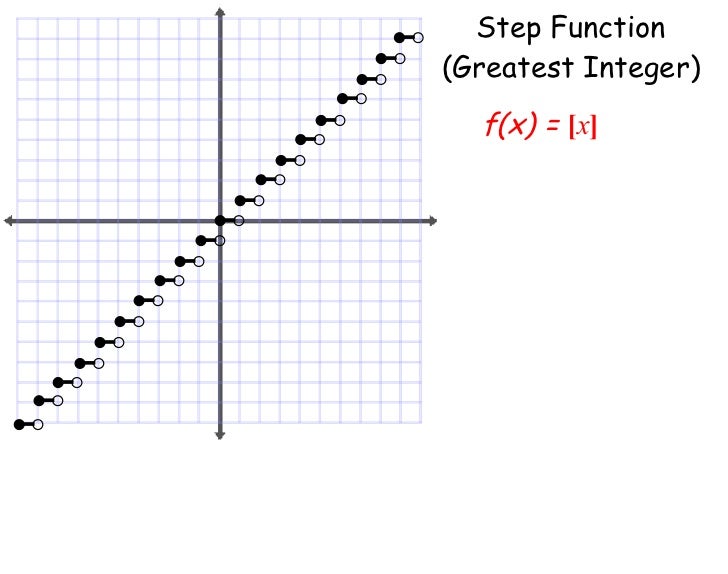
Another analogy we talked about was step-type functions. A step-wise function is not a curvy line like many functions. Instead, it bumps up in steps. For instance, age is a step function: you keep getting older, but it is called one age for an entire year, and then you move up to the next number as your age... but you still keep adding days for the whole next year without changing your age number.

The function itself, depending on how it's defined, can have flat lines - as if you didn't age at all during the year, and you aged all at once on your birthday. When you have a function like this, each new level has a completely new value from the prior "step".
https://image.slidesharecdn.com/parent-functions-1222658238482756-8/95/parent-functions-14-728.jpg?cb=1222633081
Image Credit: link to original image
Grief can feel like this, too: For instance, I feel like I was in a fog for the first 6 months after Charlie died. After that, I thought I was doing a lot better (and I was), but in hindsight, the remainder of the first year was yet another step on the journey of coming to a place where I was more functional. For me, I noticed these phases or steps in hindsight, but for some people, there can truly be a day where you feel like you "wake up" and realize how badly you were dealing with the rest of life. And at that point you move to the next phase of how well you are doing.


All of these are analogies, which of course means they aren't a perfect description of how life and grief works. They are just a way to explain and help people understand. I hope these - which I find to be a neat way to gain a new perspective - are helpful to you too.


Yours,

Sarah

To subscribe, find the "subscribe by email" note in the left column and enter your email there. Posts will be emailed directly to you whenever I post them!

Resource list: Visit my spreadsheet at www.tinyurl.com/infantloss

Tuesday, January 2, 2018

By The Numbers


By the Numbers

The Statistics of Baby Loss

Hi Friends,

  This is going to be a brief explanation of the statistics of baby loss you may see floating around. Some are true, some are false, and most are simply a little misleading unless you hear where the numbers are from. I will be including my sources wherever possible.

"I'm the 1 in 4". You hear people say that 1 in 4 women experiences pregnancy loss (i.e., miscarriage or stillbirth). It turns out that this statistic is based on number of pregnancies, not number of women, so what it means is that 1 out of every 4 pregnancies does not successfully result in a live birth. I am working on finding out if this includes pregnancies where the mother didn't yet know she was pregnant (in which case, it would be a smaller percentage of known pregnancies, since many pregnancies just end up being the next cycle), or whether this is just from known pregnancies, in which case it's a very high number. I'm also looking into whether this statistic is world-wide or just the US. I'm having some trouble finding the data on this today, but I know it's out there.

Miscarriage A pregnancy loss in the first 20 weeks of pregnancy

Stillbirth A pregnancy loss in the 20th week and beyond (in the US) or 25th week and beyond (Global Health Organization standards) - but the baby is not born alive (https://www.cdc.gov/ncbddd/stillbirth/facts.html). According to the Center for Disease Control (CDC, an American agency), about 1% of all pregnancies end in stillbirth. According to the World Health Agency (WHO), it's more like 1.8%, and much of it preventable (http://www.who.int/reproductivehealth/topics/maternal_perinatal/stillbirth/en/). This cool data chart (GHO Stillbirth rates by Country) lets you look up rates world wide. According to this chart, the percentage in the United States is about 0.3%. There are some countries with high rates like 2.25%, and others with low rates (Iceland, for instance, at 0.13%).

"There are 25,000 stillbirths a year" Just about, if you only consider the United States. According to the CDC, the data from 2013 shows that 24,000 babies are stillborn each year in the United States. According to WHO, "Every year, worldwide, [...] 2.6 million babies are stillborn" (http://www.who.int/mediacentre/news/releases/2016/stillbirths-neonatal-deaths/en/).

Obviously, this barely scratches the surface, and I will be doing a follow-up post at some point, with more details.


Most sincerely yours,
~ Sarah

Friday, June 16, 2017

Learning and Growing

This is a tree in the cemetery. I don't know what kind it is.


Dear friends,

I recently learned a phrase that I find beautiful, and really hits the nail on the head.

Have you ever noticed how, in English, we have no real, common word for a parent who has lost a child? We might call them a a loss parent, maybe. I suppose bereaved parent is pretty good.

However, in German, they can be called Verwaiste Eltern. This means orphaned parents. Sometimes I really feel this way - but instead of someone missing who should be caring for me, I feel like the missing person is one I should be caring for.
One of my German aunts told me this word. I'm really glad she did. I am more comfortable expressing myself in English - I have a better grasp of nuance - but every once in a while there is a word or phrase that just encapsulates an idea perfectly.

Edited to add: my mom pointed out there is an English book called "Orphan Mother" and that it's a phrase. Which is cool! I'd never heard that before. I like it.

The azalea by our front step.

I noticed I have started looking at things differently now. Maybe not majorly, but little things. I notice flowers more, and their details, so I started doing more photography and learning how to capture light and color and texture.
I notice nice phrases of how to say things related to loss. I notice everyday bits of language that I never before noticed could be harsh (Click here for my post about what not to say), and so I blog about them so you can also access my insights if you are interested.

One of the crocuses I planted at Charlie's grave.

I'm also learning new skills, and coming back to old skills. For instance, since I wanted Charlie's grave to be beautiful, and the cemetery allows us to plant (within a certain distance from the headstone), I am now learning to garden. I've even expanded this: Charlie has the potted garden on our front step as well, and I have a veggie garden out back, too! The beans are going to do well, and maybe the peas, spinach, and kale. Not as sure about the others, yet! I'd helped my mom garden when I was a kid, so I know how to plant, weed, and harvest, but I don't have a lot of the knowledge about timing or what to do if a plant is poorly.

Anyone know what this is? I planted it at his grave, but threw out the bag. They are bulbs.

After Charlie was born, I took a long break from crafts of all kinds. I'd been excitedly working on a baby blanket for him, and so I put it in a box for several months and didn't touch anything. However, finishing that blanket brought life back to my hands, and that's when I started my Etsy store. I knit and crochet a lot now, though I haven't done as much sewing yet. Some of what I do, I do for the store, some for myself, and some for a local group that donates baby blankets to the local NICU.

A forget-me-not bloom, from his potted garden. On my jeans.

I'm also rediscovering my love of drawing. I took part (am taking part - I'm not actually done) in a creative healing workshop. It was conducted exclusively online, and allowed me to participate at my own pace, though the structure was one creative expression per day. I primarily chose drawing. If you haven't been seeing my posts on Facebook, search for #MWAH2017 or #MAYWEALLHEAL. If you're not on Facebook, let me know in the comments if this is something you would like to see me post about, or if you know me personally, ask to see my sketchbook!

A double narcissus, from his grave. Post-rainstorm.

I've also picked math tutoring back up, and am generally exploring who I am. I'd planned to be a diaper-changing mama. Being a memory-keeping mama is taking some adjustment and exploration. I still have days where I don't function well. But I also have days (or moments) when the beauty breaks through the clouds and lights up my world.

Most sincerely yours,
~ Sarah

Infant loss resource document: www.tinyurl.com/infantloss

Monday, January 20, 2014

Winter Hats, Part III: Mathematical Shapes (Mobius and Klein bottle)

Part III of winter hats is here! And this time it's math-based. Remember Part I? It featured a blue hat? Well, I had yarn left over, in prodigious amounts. So I decided to make something for myself. I had seen a Mobius scarf, which I had really liked the idea of. As you'll see, mine didn't turn out quite the way I'd pictured, but it works! I also made a knitted math hat. Peruse the pictures below!

Garment Data:
- Type: Hat, scarf
- Date made: Probably summer of 2008?
- Pattern: None. I looked at other hats/scarves in the math shapes I wanted, but then just went from there on my own.
- Fabric/Materials: Acrylic yarn (or maybe an acrylic/wool blend?)
- Trim: none
- Time to finish: I know it took a while! A few weeks, maybe?

The hat and scarf set. They don't look like much, but I promise that they are mathematically cool! And yet warm to wear ;)
Here you can see them together.

The scarf is actually a Mobius strip! In fact, instead of knitting a strip, putting a twist in, and having a seam, I actually took several tries to put the twist into my first row, so that as I knit, I actually went twice around and added to "both" edges before coming back to the beginning of my row!

Here you can see the twist in the scarf. This means that though it is "two-dimensional" (flat), the twist makes it 3D.

It's ribbed, 5 rows each of knit and then purl. Unfortunately this means it curls up into a narrow strand.
I tend to wear it looped 3 times around my neck.

The hat, though, is even cooler. It is a Klein bottle, which is a tube that connects to itself - but not at the ends, to make a donut ("torus"). Nope, it goes through itself!!


Here, from the outside, you can see the outer surface narrow and go in to meet the inner surface.

Here's a close-up of where the outside goes in. Instead of going through its own surface like a proper Klein bottle (explained below), since knitting is a "porous" surface, I had the small end of the tube go through a stretched hole. Then, from the other side, I widened the tube by knitting expansions into it, so that it could meet the inside tube.

Here you can see the inside of the hat, where the outside comes through and joins (you can see the seam about 3 inches down from the crown). Because of the way a Klein bottle works, the hat is actually two layers. You can also kind of see that the top of the hat was knitted on smaller gauge needles. I go back and forth on whether that was a good decision or not - it made it harder to work, and also made it less "loopy" and thus less obviously a Klein bottle.
 This video has a pretty good visual explanation of what my hat does:
Video credit to bothmer for the excellent visual explanation of how a Klein Bottle is basically a 3D Mobius strip.

As to how it compares to my hat, the curly bottom part in the video is the top of my hat. And doubled over, almost donut-like top in the video is the two-layer part of the hat that goes on my head!

Here you can see the ribbed brim I added to the part of the shape that I decided would be the best "hat" part (the top of the shape in the video). This made the shape into a true hat, since now you can see which part to put on your head!

 Most sincerely yours,
~ Sarah

Sunday, February 8, 2009

Mathematical Crocheting

Hello again!
It's been a while, but I finally have gathered together a few more pictures. So over the next few days, you can expect to see some more examples of things I've made.
Enjoy!


Here is a coat/dress that I made last year. The dress shape is the the same pattern as you have seen in the post of my cotehardie. I simply made this one out of a fawn colored wool and left the front open to the floor:

Garment Data:
- Type: Dress
- Date made: ?
- Pattern: Cotehardie (my own design, based on basic body block)
- Fabric: Fawn-colored wool blend
- Trim: Acrylic fall-colors variegated yarn, acrylic brown yarn, salvaged wedding dress buttons EDIT: New buttons! Now they are brown wooden beads
- Time to finish: ?
- Notes: The collar and cuffs are approximated hyperbolic planes


And here it is from the back:


Before I show you the detail shots, let me explain the mathematical concept behind the collar.
It is a hyperbolic plane, which means that it is somewhat like a rectangle that got really, really stretched out on one side and is so big that it can't lie flat (that's why it wrinkles up into those great waves!).
The cuffs on the sleeves are also hyperbolic. I then took the same variegated autumn colored yarn, as well as some coordinating brown yarn, to crochet all the other accents. The buttons I salvaged from a vintage wedding dress that no longer held together.
The detail pictures, as promised:

From the front, the button plaque:


The button plaque, again:


One of the sleeves, with cuff:


The bottom hem:


The collar, in all its glory (six inches at the beginning of the rectangle, probably several feet on the outside edge):


Up close and personal: I believe I did this completely in Double Stitches:


The top edge of the collar. You can see here that I affixed it by hand after crocheting it. The width you see the stitching at is the original width of the "rectangle":


Well, I hope you enjoyed looking at it as much as I enjoyed making and enjoy wearing it!!!

Most sincerely yours,

~ Sarah